Science-Backed Pain Relief & Functional Recovery with Acupuncture & PT


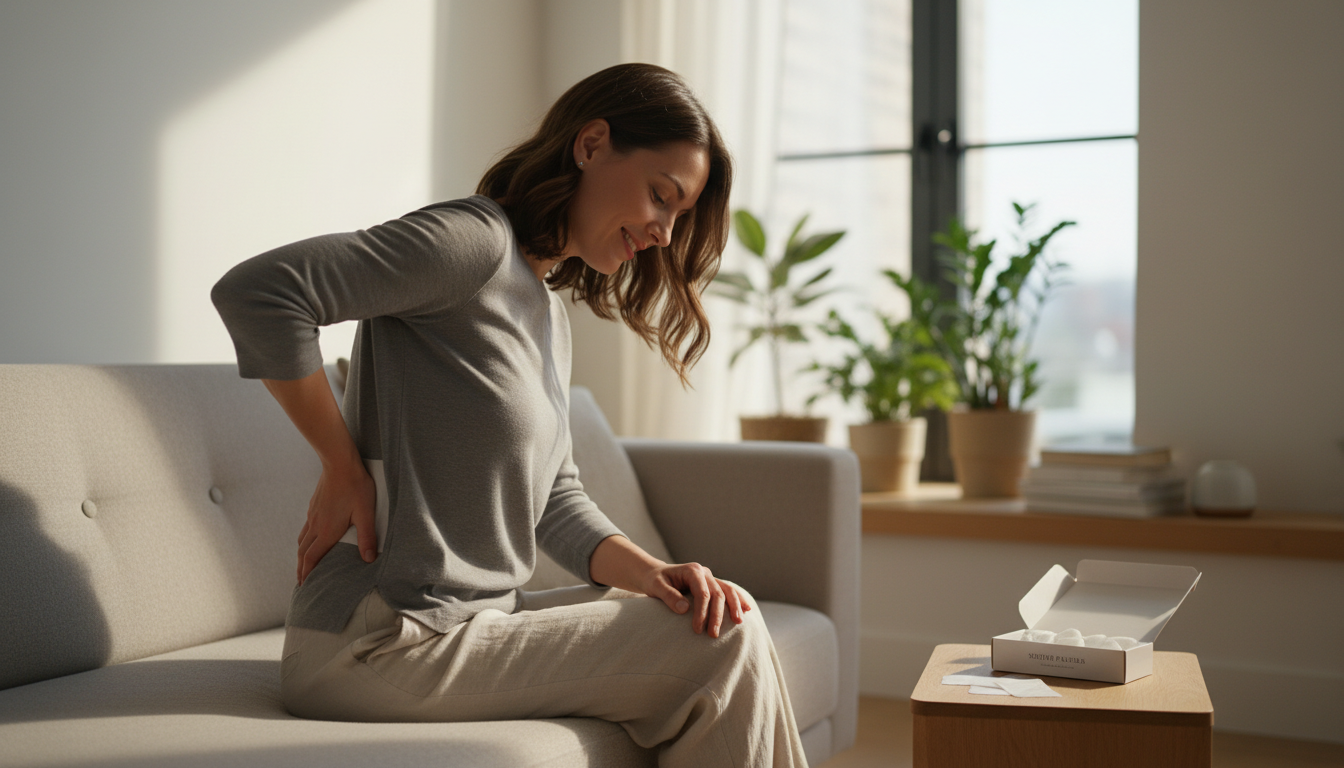
When pain, stiffness, or an injured joint limits your movement, physical therapy (PT) is often a critical part of recovery. However, the very pain you are trying to treat can become a massive roadblock. When movement hurts, patients often avoid exercise, develop protective muscle tension, and struggle to perform the specific movements needed to restore strength and mobility.
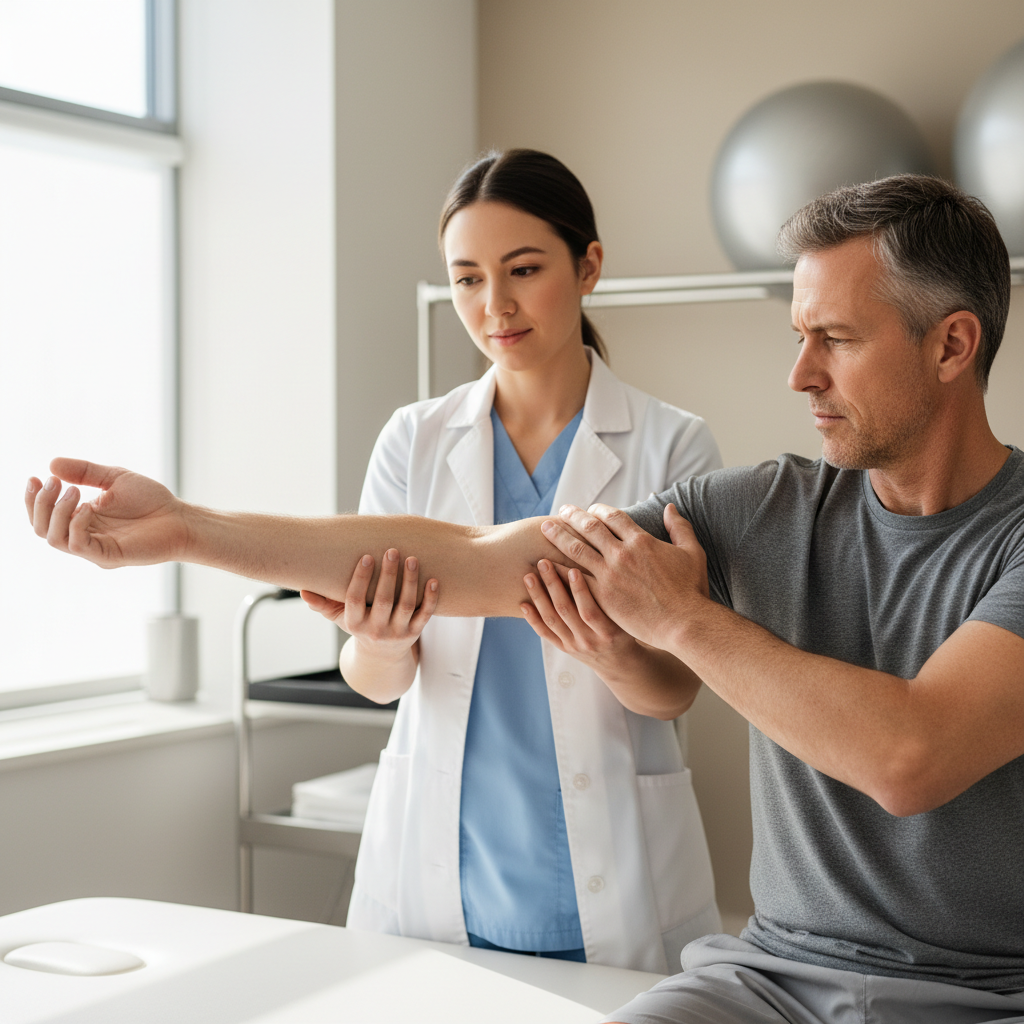
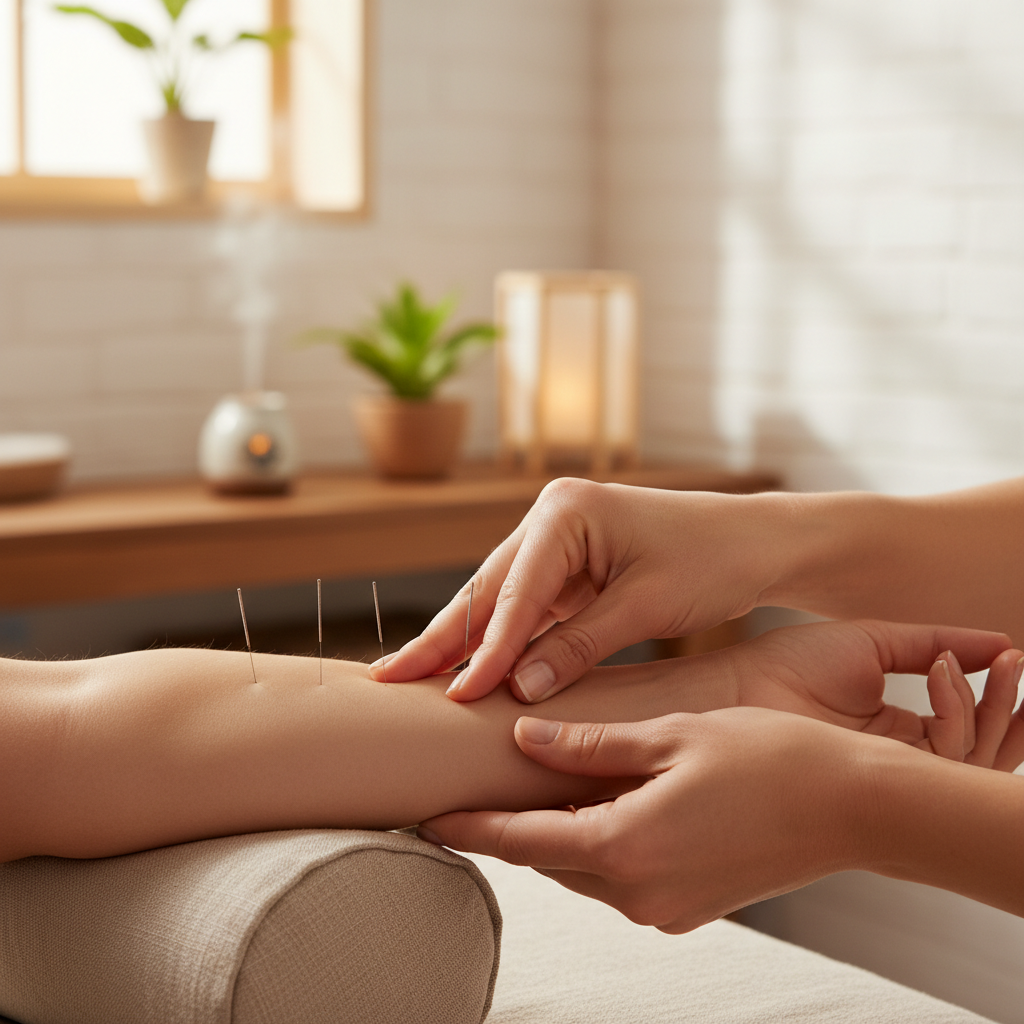
Acupuncture and physical therapy are two distinct treatments that offer unique mechanisms for pain relief. Acupuncture involves inserting thin needles into specific anatomical points to stimulate healing, while physical therapy focuses on active exercise and manual techniques to improve movement and function.
Rather than viewing these as competing options, the best clinical path to lasting recovery is to integrate them. By combining these two approaches, patients experience enhanced pain relief and accelerated functional recovery, particularly for challenging conditions like Frozen Shoulder (Adhesive Capsulitis), Osteoarthritis (OA), Lower Back Pain with Sciatica.
Science Behind Acupuncture for Pain Relief
Modern scientific research has begun to demystify traditional acupuncture concepts by examining its physiological and biochemical effects on the nervous system:
Neurotransmitter Release: Studies suggest that acupuncture stimulates the nervous system to release endorphins and enkephalins, which are the body's natural, powerful pain-modulating chemicals.
Nervous System Regulation: By shifting the body out of a stressed "fight-or-flight" state, acupuncture down-regulates the nervous system's perception of pain.
Inflammation Regulation: Clinical trials show a positive correlation between acupuncture and a reduction in localized pain, stiffness, and mechanical limitations during arthritis flare-ups.
What the Research Says: Combining Treatments vs. Monotherapy
Recent clinical data strongly supports an integrated approach, proving that utilizing acupuncture for pain management alongside active rehabilitation to rebuild joint capacity yields the best patient outcomes.
The 2023 Meta-Analysis: Stronger Together
Data from the 2023 systematic review and meta-analysis published by Chen et al. in the Journal of Orthopaedic Surgery and Research showed precise clinical statistics supporting the integration of acupuncture and physical therapy. [1, 2]
The meta-analysis evaluated 11 high-quality randomized controlled trials (RCTs) encompassing a total of 774 individuals with knee osteoarthritis. [1]
Acupuncture + Exercise vs. Acupuncture Alone
When comparing patients who received a combined approach of acupuncture and active exercise training against those who received acupuncture alone, the statistics demonstrated superior clinical outcomes:
Total Effective Rate: The combined protocol showed a significantly higher success rate, with a Relative Risk (RR) of 1.13. [1]
Pain Reduction: Measured via the Visual Analog Scale (VAS), the combined approach achieved an additional Mean Difference (MD) reduction of -0.74 points. [1]
Knee Function (WOMAC): Functional improvement scores were substantially higher in the combined group, showing a Mean Difference (MD) of -6.97 points. [1]
Range of Motion (ROM): The combined group achieved a vastly superior joint extension and flexion capability, increasing the physical range of motion by a Mean Difference (MD) of 6.25 degrees. [1]
Acupuncture + Exercise vs. Non-Acupuncture Therapies/Exercise Only
When pitted against control groups that did not receive any form of acupuncture (e.g., standard Western medicine or exercise alone), the combined strategy yielded even starker statistical advantages: [1, 2]
Total Effective Rate: A highly significant RR of 1.31 favoring the integrated protocol.
Pain Reduction: An increased pain alleviation metric showing a Mean Difference (MD) of -1.42 points on the VAS.
Knee Function (WOMAC): An overall optimization in physical mobility and ease of movement with an MD of -7.05 points
The 2024 Randomized Controlled Trial: Sustained Results
A 2024 randomized controlled trial directly compared three distinct clinical tracks for moderate-to-severe knee osteoarthritis among 110 participants:
Four-Week Treatment Response Rates:
Combined Approach (Acupuncture + Exercise): 83.3%
Acupuncture Monotherapy Alone: 65.7%
Exercise Rehabilitation Alone: 58.3%
Crucially, the superior functional improvements achieved by the combined group were maintained for at least eight weeks post-treatment. This study underscores that acupuncture and physical therapy should be viewed as complementary partners rather than competing treatments.
The Best Approach: Incorporating Acupuncture into Your Recovery Plan
To get the most out of your rehabilitation, acupuncture should be positioned strategically within your care timeline. Rather than using it as a last resort, the most effective approach is to utilize acupuncture as a functional bridge to active movement.
Chronic joint pain frequently triggers a debilitating physical feedback loop:
Pain ⟶ Muscle Guarding ⟶ Decreased Movement ⟶ Stiffness/Weakness⟶ Loss of Function
Acupuncture effectively interrupts this degenerative cycle. By mitigating acute pain and down-regulating protective muscle tension, it broadens the patient's immediate range of motion (ROM) and movement tolerance window. Once movement becomes comfortable, physical therapy can safely step in to aggressively target underlying biomechanical limitations through:
- Progressive joint loading and stabilization.
- Strengthening exercises for the quadriceps and hamstrings.
- Gait training to correct limping patterns.
- Balance, proprioception, and motor-control drills.
Head-to-Head: Acupuncture vs. Physical Therapy
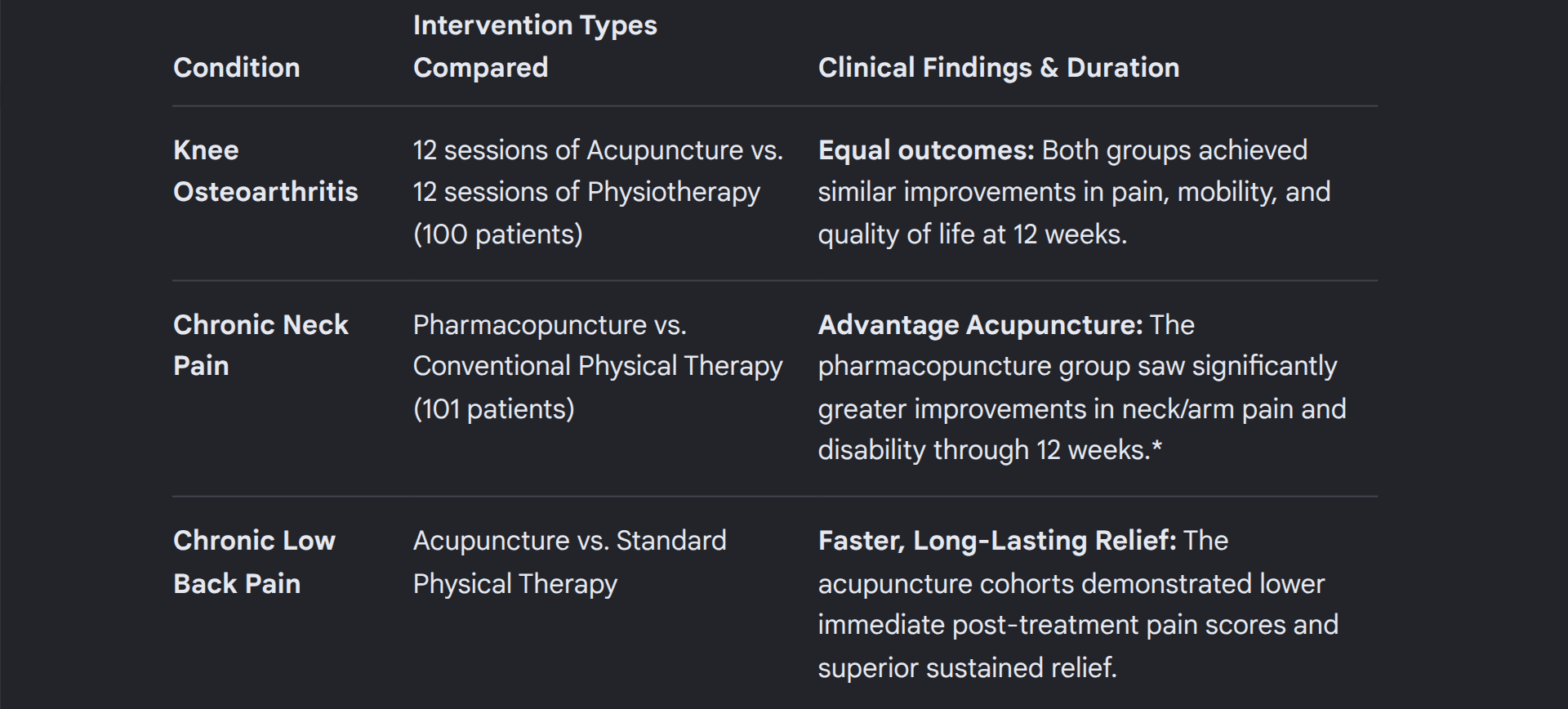
Is acupuncture better than physical therapy? The data indicates that neither completely replaces the other, but both excel at different aspects of musculoskeletal care across various conditions.
Musculoskeletal Outcomes Across Conditions
The Care Roadmap: Acupuncture as a Bridge to Movement
Thinking of acupuncture as a functional bridge to active movement helps structure an effective timeline for long-term joint health.
Pain & Guarding Reduction ⟶⟶
⟶ Decreased discomfort via targeted acupuncture.
Restored Range of Motion (ROM) ⟶⟶
⟶ Easier movement through a previously painful range.
Enhanced PT Participation ⟶⟶
⟶ Exercises performed with higher tolerance and less tension.
Strength & Stability Build ⟶⟶
⟶ Progressive loading addresses underlying weaknesses.
Return to Daily Activities ⟶⟶
⟶ Improved walking, stair climbing, working, and sports.

Key Clinical Takeaways
Proven Pain Relief: Extensive systematic reviews confirm acupuncture is highly effective for localized musculoskeletal pain, specifically in knee osteoarthritis and low back pain.
Enhanced Functional Gains: Combining acupuncture with exercise yields greater functional improvements and higher treatment response rates (83.3%) than using either treatment as a standalone monotherapy.
Sustained Recovery: The mobility and function benefits gained from a combined protocol are maintained long after the active treatment phase ends.

References:
Lang-Illievich, K., et al. (2023). "Efficacy of therapies in knee osteoarthritis: A Systematic Review and Meta-Analysis." Journal of Back and Musculoskeletal Rehabilitation / Nutrients [1].
Chen, X., et al. (2023). "Efficacy of acupuncture combined with active exercise training for knee osteoarthritis individuals: a systematic review and meta-analysis." [2].
Clinical Trial Data (2024): "Combined acupuncture and exercise rehabilitation protocols for moderate-to-severe knee osteoarthritis among 110 participants."